

I’ve been thinking a lot about how we decide what parts of ourselves we’re allowed to show to the world. And as a musician, I think we do this with our art all the time.
We find a sound we like, a scene we feel comfortable in, a label that seems to explain what we do, and eventually that thing becomes part of how other people understand us and how we label our own identity. Sometimes it’s useful and necessary, but I’ve also found myself wondering what happens to all the other things that don’t neatly fit into the box.
The music we loved before we found our current sound, all the things we’re curious about, the parts of ourselves that contradict each other, and the things we might hide because they make the picture a little harder to understand.
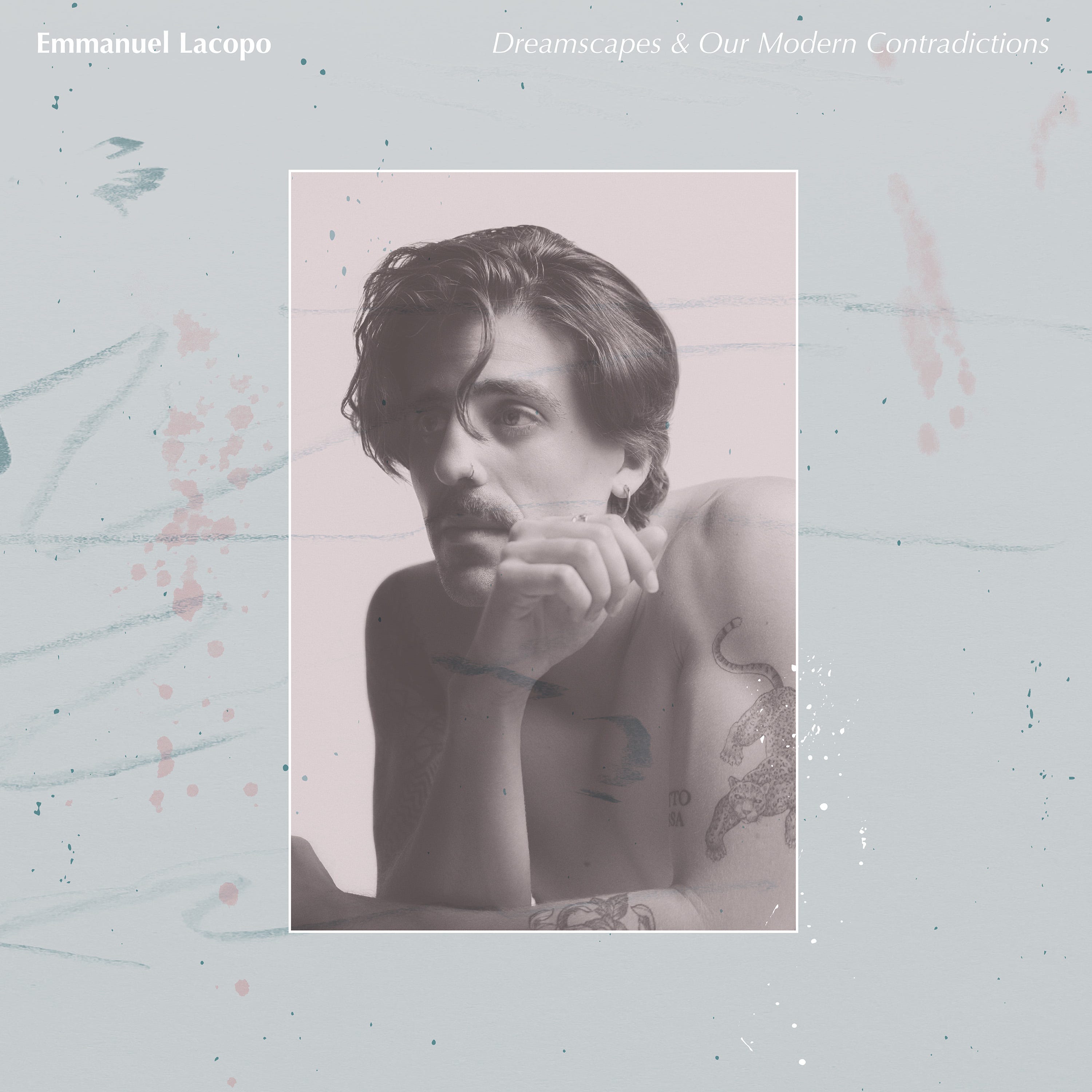
That idea became one of the starting points for my new album, Dreamscapes & Our Modern Contradictions, and it’s out today. (Apple Music — Spotify)
I started making this record about three years ago, and when I began, I had a pretty different idea of what it was going to be.
At the time, I thought I was making a mostly intimate instrumental guitar album. Classical guitar, electronics, maybe some other textures here and there. But it didn’t stay that way for very long.
The more I wrote, the more I found myself pulling in things that had been part of my musical life for years but didn’t necessarily seem like they belonged together. Rock, Metal, Ambient music, Post-rock, Experimental music, Improvisation, Classical music.
Then came strings, drums, saxophone, synthesizers, electric guitars, live processing, and homemade percussion. Eventually I added my own voice, because I spent years hiding behind instruments, and singing was something I was always super insecure about.
There’s something about using your own voice that feels much more exposed. You can’t really hide behind technique in the same way, and it forced me to be more vulnerable than I was used to being, which ended up becoming an important part of the album.
The more the record grew, the less interested I became in trying to make everything fit together neatly.
We tend to put ourselves into single categories:
You’re a classical musician.
You’re a guitarist.
You’re a composer.
You make ambient music.
You make rock music.
You’re this kind of artist.
You’re that kind of artist.
These descriptions can be useful, but they can also become boxes. And sometimes I think we start editing ourselves too much to fit inside them.
We all contain contradictions.
We can love completely different things. We can be confident one day and completely lost the next. We can want to be seen while also wanting to disappear. We can find something beautiful and frightening at the same time.
I wanted the album to reflect that, so the eclectic nature of the record isn’t accidental.
I wanted all of these different sounds to exist next to each other because they’re all things I genuinely care about. Classical guitar doesn’t have to cancel out electric guitar. A string ensemble doesn’t have to cancel out a giant pedalboard. A quiet guitar piece can exist next to something dense and noisy. My voice can exist alongside all of it.
Why should they have to become one thing?
The title Dreamscapes & Our Modern Contradictions comes from that same idea.
The “dreamscapes” are the internal worlds we create and retreat into: memories, dreams, fears, nostalgia, imagination, and all of those strange places that exist somewhere between reality and our perception of it.
The “modern contradictions” are the things we carry with us while moving through everyday life.
The two ideas started to feel inseparable.
A lot of the album came out of a difficult period in my life. There were things I was dealing with that were difficult to understand, let alone put into words. Music became a way of processing some of that without needing to resolve it.
There’s depression, addiction, isolation, fear, and a lot of uncertainty behind some of these songs.
I don’t think I consciously set out to make an album about those things. Instead, they became part of the environment the music came from, and that’s probably why so much of the album lives in contrasts.
Noise and stillness, beauty and fear, comfort and discomfort, fragility and density, intimacy and overwhelming moments, wanting to belong while also wanting to disappear, and trying to control things while slowly realizing that you really can’t.
I didn’t want to resolve these contradictions, I wanted to leave room for them to exist together. That became one of the biggest lessons of making this album.
During this process I became increasingly interested in what happens when you let go of some of the control that our artistic environments teach you to create. So I started experimenting with things that were probably not the most practical ways of making music.
I bowed a glockenspiel, I recorded water bowls, I made homemade percussion, I layered electric guitars until they stopped sounding like guitars, I used a Bass VI, synthesizers, loops, live processing, and an increasingly ridiculous collection of pedals.
The more I worked this way, the less interested I became in making everything perfect.
I wanted it to feel lived in, and I wanted to hear the person who made it. Because the person who started this record wasn’t exactly the same person who finished it.
Maybe that’s inevitable.
Maybe that’s also why I don’t think of the album as a completely resolved statement about who I am as an artist.
It feels more like a document of a period when I was figuring that out.
There are still contradictions in the record that I don’t fully understand, and I think that’s okay.
Music has always been one of the ways I understand things that I can’t explain very well otherwise. Sometimes you don’t need to figure something out before you make something from it. Sometimes you just need somewhere for it to go.
A place for all of these different sounds, experiences, influences, memories, and contradictions to exist together without needing to explain themselves.
And now it’s yours.
I hope that somewhere in these songs you find something that feels familiar.
Dreamscapes & Our Modern Contradictions is out now.
Listen:
Get the album on Bandcamp:
Credits
Classical/Electric Guitars, Bass, Vocals, Percussion — Emmanuel Lacopo
Cello — Joshua Morris
Violin — Maitreyi Muralidharan
Viola — Troy Stephenson
Tenor Saxophone — Thomas Gauthier-Lang
Drums — Martin Daigle
Recorded by Leonard Menon & Shae Brossard
Mixed & Mastered by Leonard Menon
Recorded at Hotel2Tango
Montréal, QC
2025
Watch That Ends The Night Records
Photography/Videography by Anthony Jamie Bucciacchio
Huge thank you to Michael and Andrew at Watch That Ends the Night Records for believing in this project and for all the love they’ve put into it.
And thank you to everyone who helped make this record what it became.
Dreamscapes & Our Modern Contradictions — out now.